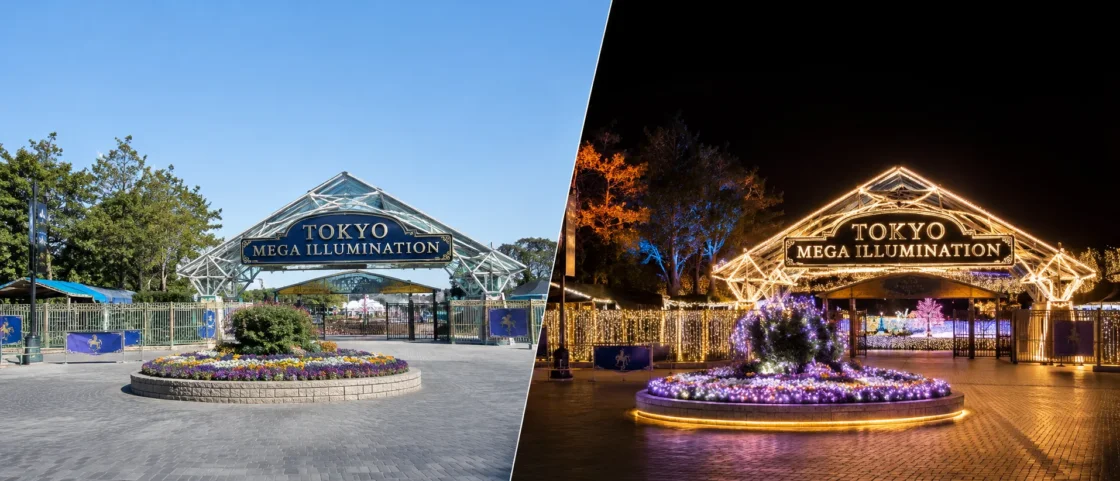
Tokyo Mega Illumi transforms Oi Racecourse in Shinagawa, Tokyo, into a seasonal nighttime attraction with illuminated pathways, musical fountains, laser effects, and light installations inspired by Japanese scenery. Rather than one continuous performance, several light-and-sound productions repeat during the evening. The 2026–2027 edition is especially notable: it is the event’s ninth and final season before a temporary suspension associated with redevelopment at Oi Racecourse.
Current Opening and Show Schedule
No regular schedule is currently listed.
The venue’s admission hours and the start times of its individual fountain and lighting performances are different. Once inside, you can explore the illuminated areas and watch the repeating productions without purchasing separate tickets for each show.
How the Fountain and Lighting Performances Work
Tokyo Mega Illumi has four principal nighttime productions arranged in a recurring sequence. They take place in different parts of the racecourse grounds, so the experience involves moving between installations rather than watching everything from one fixed seat.
- Rainbow Fountain Show: Water jets, colored illumination, lasers, and music create a coordinated fountain performance. Three musical programs alternate through the evening: Rock The Splash, Sing & Sing, and Hyper Classic.
- Mega Tree: A large illuminated tree structure changes colors and lighting patterns in synchronization with music. The installation is one of the signature features scheduled for its final appearance in the 2026–2027 season.
- Aurora Forest: Laser effects project sweeping patterns above illuminated trees, creating an aurora-inspired display across the nighttime setting.
- Twinkle Light Show: Multiple light installations across the grounds respond to music in a coordinated sequence, including effects involving the Mega Tree.
The fountain alternates between its three musical programs rather than repeating the same soundtrack at every performance. The Mega Tree, Aurora Forest, and Twinkle Light Show provide separate visual experiences within the larger program.
Can You Watch More Than One Performance?
Yes. The recurring format makes it possible to explore another section of the venue and return for a later performance. The official venue guide identifies the fountain show, Mega Tree, Aurora Forest, and Twinkle Light Show as the four recurring productions.
The fountain is a particularly useful place to plan your route around because it features distinct musical sequences. If a performance has already started when you reach the area, watching a later presentation may give you a more complete view without needing to hurry through the illuminated pathways.
Two Different Fountain Experiences
The recurring musical fountain show is separate from the special fountain presentation involving lead horses. The horse-and-fountain event is associated with selected weekend and holiday programming and should not be assumed to accompany every fountain performance.
Edo Sakura Tunnel and the Japanese Landscape Illuminations
The Edo Sakura Tunnel is one of Tokyo Mega Illumi’s most recognizable installations. This approximately 100-meter (328-foot) illuminated passage uses individual lights shaped like cherry blossom petals. Visitors walk through the tunnel while its changing colors and accompanying music create different interpretations of Japan’s seasons.
Beyond the tunnel, the Japanese-inspired displays move away from the fountain’s large-scale water effects and focus on landscapes. The Japanese Original Landscapes installation represents rural scenery, particularly rice fields and agricultural landscapes, using organized fields of light and seasonal color changes.
Other installations include Seiryu no Kagayaki, which draws on the imagery of flowing water and water lilies, and Kosai no Otaki, a colorful illuminated waterfall scene reached through a bamboo-inspired light display. The Rose Garden adds decorative illuminated flowers to the Nagomi area.
The Twinkle Area and Interactive Photo Installations
The TWINKLE area has a different visual style, with brighter, more colorful arrangements and lighting synchronized with contemporary music. The venue’s illuminated tunnels connect different sections of the course and form part of the experience themselves.
Several installations are designed for photography and interaction:
- NAKED BIG BOOK: A large book-shaped installation uses projection mapping, including effects that react to people’s movements.
- Color Shadow: Overlapping colored light creates unusual multicolored shadows against a wall, allowing visitors to experiment with different poses.
- Rainbow Grand Staircase: Stairway lighting in multiple colors creates a recognizable photo location, with strong contrasts between the illuminated steps and visitors’ silhouettes.
- Wisteria Display: Purple illuminated artificial flowers hang overhead in a decorative arrangement inspired by Japanese wisteria.
- Moving Lights: Projected light effects move across the ground, adding an interactive element for children and adults.
These installations do not all require waiting for a scheduled performance. Many can be explored at your own pace between the recurring light-and-sound productions.
Meeting Miniature Horses and Ponies
Because Tokyo Mega Illumi takes place at an active horse-racing venue, it offers experiences not normally found at a city illumination festival. Miniature horses and ponies are part of the event’s scheduled activities, giving families the opportunity to see real animals alongside the lighting displays.
The regular horse program includes miniature horse and pony encounters and opportunities to observe the animals in designated areas. The venue also schedules special activities on weekends and Japanese public holidays, including pony rides, photography opportunities with lead horses, and the horse-and-fountain presentation.
Pony rides require a separate paid reservation and have limited availability. General illumination admission does not automatically include a pony-riding session.
Horse activities can change according to weather and the animals’ condition. Photography around the animals must follow staff instructions; flash photography is prohibited, and lead horses should be viewed and photographed from behind the designated barriers.
RODY Activities and Family Facilities
The 2026–2027 season continues the event’s collaboration with RODY, the colorful horse-shaped children’s toy character. The program includes a RODY play area, themed merchandise, a venue-wide stamp activity, and special character appearances on scheduled dates.
Families with younger children can use strollers throughout the venue. Lifts are available where stairs would otherwise restrict access, although there may be a short wait during busier periods. The venue also provides nursing rooms, diaper-changing facilities, and a limited number of loaner strollers.
The illuminated displays occupy a substantial outdoor area, so families may prefer to divide their visit between the walking route, horse activities, and a break at the food facilities. The program is an illumination event, not an evening horse-racing meeting; regular races are not held during Tokyo Mega Illumi sessions.
Getting to Oi Racecourse
Tokyo Mega Illumi takes place at Oi Racecourse, 2-1-2 Katsushima, Shinagawa-ku, Tokyo. The venue is in southeastern Tokyo, with convenient rail connections from Hamamatsucho and Haneda Airport.
| Transport | Station or Route | Access Details |
|---|---|---|
| Tokyo Monorail | Oi Keibajo-mae Station | Approximately 2 minutes on foot |
| Keikyu Main Line | Tachiaigawa Station | Approximately 12 minutes on foot |
| From Hamamatsucho | Tokyo Monorail | Approximately 8 minutes by train to Oi Keibajo-mae |
| Toei Bus | Shin-Hamagawabashi | Approximately 5 minutes on foot |
| Keikyu Bus | Oi Keibajo Ekimae | Approximately 1–2 minutes on foot |
For travelers coming from central Tokyo, the monorail connection at Hamamatsucho is particularly straightforward. The same monorail line also serves Haneda Airport, although train stopping patterns should be considered when selecting a service.
Entry to Tokyo Mega Illumi is normally through Oi Racecourse’s North Gate. This is worth checking when using navigation apps, since the racecourse has other access points used for racing operations.
Admission, Tickets, and Time Inside the Venue
Tokyo Mega Illumi is a ticketed attraction, with different admission rates depending on the selected date. The listed admission information is Ticketed; date-based pricing applies.
Advance tickets are date-specific rather than assigned to an individual performance time. Visitors can enter at a convenient point during the permitted admission window and move through the installations at their own pace. Advance booking is useful on popular dates because general same-day ticket sales may be restricted when the venue approaches capacity.
The venue recommends allowing approximately one to one and a half hours to see the illuminations. This is a sightseeing estimate for walking through the grounds, not the length of a single performance. Dining, photography, horse encounters, and waiting for particular lighting sequences can extend a visit.
Food options include the STAR LIGHT restaurant, casual food outlets, and takeaway items, with some businesses operating only on selected days. Outside food and beverages are generally not permitted, subject to the venue’s rules.
Winter Weather, Walking, and Accessibility
Most of the lighting installations are outdoors. Comfortable walking shoes and warm layers are sensible choices, particularly during windy evenings. Visitors standing near the fountain should also be aware that spray can travel toward viewing areas depending on wind direction.
The event normally operates in rain, although severe weather can affect individual performances or cause a closure. Operating days and hours vary by calendar; closures can occur.
Wheelchair access is supported by lifts at locations where stairs would otherwise be required. A limited number of wheelchairs can also be borrowed without charge. Some routes and facilities may involve waiting for a lift during crowded periods.
On-site parking is available for visitors arriving by car, with separate parking charges. The parking facilities and entry arrangements are managed independently of the illumination admission ticket.
The 2026–2027 season is the final scheduled edition before Tokyo Mega Illumi pauses for redevelopment of the racecourse. The announcement describes a temporary suspension, not a confirmed permanent closure, and does not establish a reopening date.
Sources
- Tokyo Mega Illumi — Official Venue Guide, Fountain Programs, and Illuminations
- Tokyo Mega Illumi — Official FAQ, Opening Information, Horse Activities, and Accessibility
- Tokyo Mega Illumi — Official Tickets and Admission Information
- Tokyo Mega Illumi — Official Transport, Parking, and Access Information
- Shinagawa Tourism Association — Tokyo Mega Illumi 2026–2027 Event Announcement