Tonight’s times
Venue local timeSchedule
Current published scheduleLocation
MapMap
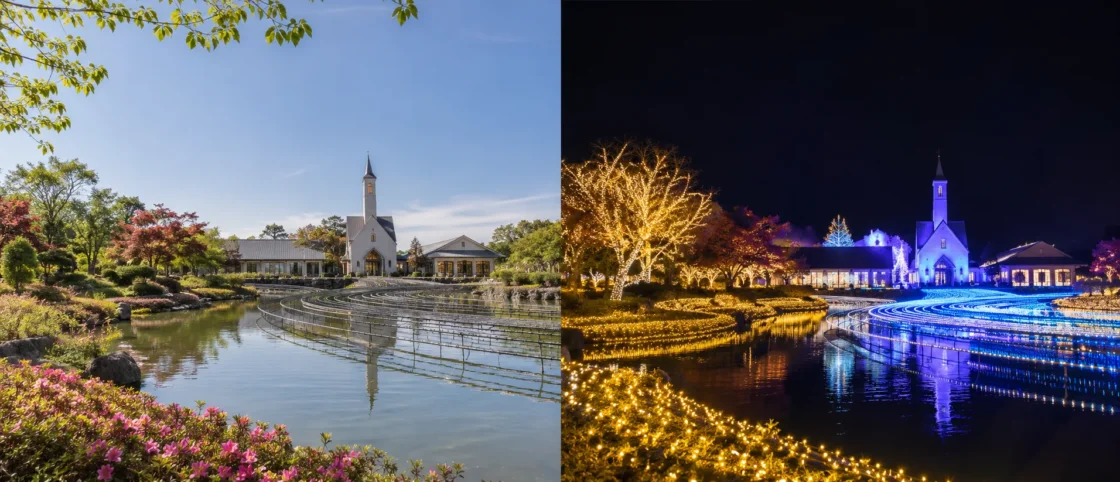
Nabana no Sato in Kuwana, Mie Prefecture, Japan, illuminates its flower gardens with extensive light tunnels, illuminated waterways, and large-scale animated displays. The lights switch on around sunset, so the starting time changes throughout the season. Once illuminated, the gardens remain lit until closing, while the main themed installation presents a programmed sequence of changing scenes.
When Do the Lights Turn On?
From October 17, 2026 through May 31, 2027, Daily, the schedule begins at sunset.
The lighting ceremony follows sunset rather than a single year-round starting time. The published switch-on time applies to the main installations; some pathway lights may turn on earlier. All times are local Japan Standard Time (JST).
Christmas Admission Arrangements
For December 23–25, 2026, Nabana no Sato requires special date-specific advance tickets, with limited availability. Ordinary admission tickets and regular train-and-bus combination tickets are not valid during these Christmas operating dates. Entry begins in the afternoon, and admission at the gate is available only if tickets remain.
How the Evening Illumination Schedule Works
Nabana no Sato’s evening illumination follows the changing sunset throughout the year. In late autumn and winter, darkness arrives earlier, allowing the lights to begin during the late afternoon or early evening. As daylight lengthens toward spring, the lighting ceremony moves later.
The switch-on is a particularly recognizable part of the experience. Around the gardens, major lighting installations illuminate near the scheduled time, including the Twin Trees beside the chapel. The chapel bells signal the lighting moment, while the surrounding gardens and waterways become illuminated.
Is There a Show Every Hour?
The illumination is not a single performance repeated only at fixed hourly intervals. Its large light tunnels, illuminated trees, and waterfront decorations generally remain lit continuously after the evening switch-on. Visitors can walk between installations without having to attend each one at a particular minute.
The main themed area operates differently from the static installations. Its synchronized lighting and sound presentation progresses through a series of animated scenes. Visitors arriving after the initial switch-on can still see the themed lighting presentation, although they may encounter the sequence after it has already started.
Illumination Season and Garden Hours
The show is scheduled from October 17, 2026 through May 31, 2027. January 6–7 closed.
Nabana no Sato is also a daytime flower attraction. The park’s opening time, the evening lighting time, and the final admission time are separate. Entering before sunset allows time to explore the gardens or visit the Begonia Garden before the outdoor lights come on.
Admission closes 30 minutes before the park’s scheduled closing time. The daily operating calendar may have special hours for holidays and other events, while maintenance closures interrupt the otherwise extended illumination season.
What Happens When It Rains?
Illumination generally operates in rain; operating dates/hours can change.
Nabana no Sato normally continues its illumination during rain. Reflections on wet pavement and water surfaces can make the lighting appear different from a dry evening. Most outdoor viewing areas are exposed to the weather, however, and separate attractions such as the Island Fuji observation ride may suspend operation when conditions are unsuitable.
The Light Tunnels, Waterfront, and Wild Paradise
The illumination covers multiple areas of Nabana no Sato rather than concentrating everything on a single stage. Visitors move through illuminated garden paths, a long golden light tunnel, the central pond, and a large themed exhibition area. Some installations are permanent features of the illumination program, while others change between seasons.
The 200-Meter Tunnel of Light
The Hana Kairo (Flower Corridor) is a roughly 200-meter-long illuminated passage near the entrance to the main themed area. Its overhead canopy uses numerous warm-colored LED lights fitted with petal-shaped decorations, creating a continuous golden corridor.
The tunnel is a walk-through installation, not a timed performance. Its lighting is generally maintained from the evening switch-on until the park closes. The enclosed perspective makes it particularly recognizable in photographs, with the illuminated canopy extending along the pathway.
Wild Paradise: The 2026–2027 Main Theme
The 2026–2027 presentation introduces Wild Paradise (Yasei no Rakuen), an animated display built around prehistoric landscapes, wildlife, ecosystems, and changing natural environments. Rather than presenting a single static image, the installation combines large illuminated scenes with synchronized sound and movement.
The production develops through several distinct chapters:
- Prehistoric Earth: Dinosaurs, ancient vegetation, and a volcanic eruption introduce the story of changing life on Earth.
- Wildlife Paradise: Eagles, elephants, flamingos, crocodiles, hippos, and other animals appear among colorful vegetation and water features.
- Savanna and Desert: Sunset landscapes, baobab trees, lions, giraffes, zebras, and running animal herds create the central wildlife scenes.
- Oceans and Waterfalls: Underwater animals and an expansive waterfall sequence culminate in a scene inspired by Victoria Falls.
- Moonlit Jacaranda: The closing sequence features blue-purple jacaranda blossoms beneath a nighttime sky.
The main installation includes illuminated scenery extending beyond the central display. This makes the presentation easier to appreciate from a position that offers a broad view of the themed field, rather than focusing only on individual details.
Golden Safari and Flower Plaza
Another addition to the 2026–2027 season is Golden Safari in the Flower Plaza area. This installation continues the wildlife theme through champagne-gold illumination, three-dimensional LED animal figures, and an approach called Wildflower Road.
The Gold Forest section illuminates four large Himalayan cedar trees, while nearby floral beds contribute different scenery as the natural planting season changes. The area combines recognizable garden vegetation with the artificial wildlife figures rather than relying entirely on projected imagery.
Waterfront Illumination and Twin Trees
The Hikari no Taiga (River of Light) installation occupies the water around the central pond. Its illumination creates broad patterns across the water surface and can be viewed from several positions along the surrounding pathways.
The Twin Trees near the chapel are another established landmark. Their lighting is closely associated with the evening switch-on ceremony, making them different from installations that visitors simply encounter while walking through the park.
Seasonal Flowers Under the Lights
Although the illumination begins during autumn, it continues into the spring flowering period. Cosmos and dahlias appear in the autumn garden displays, while late winter and spring bring opportunities to see illuminated plum blossoms, early cherry blossoms, tulips, and nemophila. The exact appearance of the flower beds depends on blooming conditions.
Where to Watch the Lights Turn On
The viewing location affects what you see at the moment the gardens illuminate. The central pond, chapel area, and light tunnel offer different perspectives, and there is no requirement to remain in one viewing area for the whole evening.
| Viewing Area | What You Can See | Useful Consideration |
|---|---|---|
| Central Pond | Waterfront illumination and reflections | Useful for a broad view of the lighting ceremony |
| Millennium Garden near the Beer Garden | Surrounding garden lights as they switch on | An officially recommended location for the initial lighting |
| Chapel and Twin Trees | Illuminated landmark trees and chapel surroundings | Good for watching the bell-associated switch-on |
| Hana Kairo Tunnel | Continuous overhead golden illumination | Best experienced by walking through after the lights are on |
| Main Theme Area | Wild Paradise’s synchronized scenes | A wider position helps show the full animated composition |
| Island Fuji | Elevated views across the gardens | Separate paid attraction, subject to operation and weather |
Watching the Switch-On Before Exploring
For visitors particularly interested in the lighting ceremony, the pond or Twin Trees area offers a useful starting point. The official venue guidance also identifies Millennium Garden near the Beer Garden as a viewing location for the first illumination.
After the switch-on, the 200-meter light tunnel leads toward the large themed display. Following the garden’s indicated walking direction helps keep movement orderly in busy periods. The main exhibition and Flower Plaza can then be explored without having to return immediately to the original viewing location.
Avoiding the Busiest Walking Period
The period surrounding the initial illumination can bring concentrated pedestrian traffic, especially near the tunnel and main viewing areas. Weekends, holidays, and Christmas-related dates may attract larger crowds.
Arriving well before sunset allows time for entry, walking to the chosen viewing area, and visiting indoor facilities. Visitors who prefer quieter pathways can spend the initial lighting period in the Begonia Garden or at a restaurant before entering the more heavily visited illumination areas.
Seeing the Gardens From Island Fuji
Island Fuji is an elevated observation attraction within Nabana no Sato. Its rotating observation platform rises approximately 45 meters, offering views across the illuminated gardens and the surrounding Nagashima area.
This is a separate ride rather than part of the standard walking route. It requires an additional ticket, and operation may be affected by maintenance or adverse weather. Visitors interested in the aerial perspective should account for the ride’s separate admission arrangements and operating window.
Photography Tip
For wide photographs of the waterfront or main themed display, position yourself where the entire installation fits into the frame. Inside Hana Kairo, photographing along the walkway emphasizes the length of the illuminated tunnel. Keep pathways open for other visitors and follow the garden’s photography restrictions.
Tickets, Transportation, and Evening Entry
Admission and Ticket Arrangements
The listed admission information is Ticketed; official admission prices vary by date/package.
During the illumination season, ordinary admission arrangements include access to the Begonia Garden and a shopping or dining voucher for use at eligible facilities inside Nabana no Sato. The voucher’s value and special-event ticket conditions can differ by admission period.
The venue recommends obtaining admission tickets at participating FamilyMart or 7-Eleven stores in Japan before arrival. Tickets sold through these outlets can generally be used without first exchanging them at the venue ticket counter. Ordinary admission prices may differ between convenience-store purchases and the on-site counter.
Children below elementary-school age can enter free when accompanied by an eligible visitor. Visitors of elementary-school age and older normally require paid admission.
Traveling From Nagoya by Train and Bus
Nabana no Sato is in Nagashima, Kuwana City, Mie Prefecture, southwest of Nagoya. During the illumination season, a practical public transportation route is to travel from Kintetsu Nagoya Station to Kintetsu Nagashima Station, then board the direct bus to Nabana no Sato.
The rail journey typically takes around 20–25 minutes depending on the service and connections, followed by approximately 10 minutes on the direct bus. Not all express trains stop at Kintetsu Nagashima, so check the stopping pattern before boarding.
During the illumination season, direct buses also operate from Nagoya’s Meitetsu Bus Center. Travelers using this route should confirm that their chosen service stops at Nabana no Sato rather than traveling directly to other Nagashima Resort attractions.
For the return trip, check the last available bus before entering the gardens. The illumination can continue after a preferred transportation service has finished, particularly when the venue operates extended evening hours.
Driving and Parking
Nabana no Sato provides extensive free visitor parking. Drivers coming by expressway can approach from the Nagashima Interchange on the Higashi-Meihan Expressway or the Wangan Nagashima Interchange on the Isewangan Expressway, following local signs toward the gardens.
Traffic near the venue can build around the evening switch-on, especially on weekends and holidays. The operator encourages public transportation during busy periods. When driving, arriving before the main evening entry rush generally provides a more flexible start to the visit.
Walking Conditions and Accessibility
The illumination is spread across outdoor garden paths, so visiting several displays involves a reasonable amount of walking. Paved routes connect major installations, but crowd density can affect the experience for visitors using strollers or wheelchairs.
A limited number of wheelchairs are available through the venue, but advance reservations are not offered and availability is not guaranteed. Bringing a personal wheelchair where possible can be more dependable. Visitors with mobility needs may find the pathways easier to navigate outside the most concentrated switch-on crowds.
Food, Indoor Gardens, and Weather Preparation
Restaurants, cafés, and the indoor Begonia Garden make it possible to spend part of the visit indoors before or after exploring the illuminated paths. Restaurant reception may finish before the published closing time when waiting lists become long, so dining should not be left until the final minutes of the evening.
For autumn and winter visits, clothing suitable for extended outdoor walking is advisable. The gardens are exposed to cool evening temperatures and wind, and spring nights can still become chilly after sunset.
Location
Nabana no Sato
Komae Urushibata 270, Nagashima-cho, Kuwana, Mie 511-1144, Japan.
Sources
- Nabana no Sato — Official 2026–2027 Illumination Lighting Times
- Nabana no Sato — Illumination Attractions and Seasonal Displays
- Nabana no Sato — Wild Paradise Main Theme Area
- Nabana no Sato — Golden Safari Illumination Area
- Nabana no Sato — Illumination Admission and Opening Hours
- Nabana no Sato — Train and Bus Access During Illumination Season