Jacques Cartier Bridge Illumination Times
Jacques Cartier Bridge Living Connections
Montreal, Canada
Tonight’s times
Venue local timeSchedule
Current published scheduleLocation
Street View & mapStreet View
Map
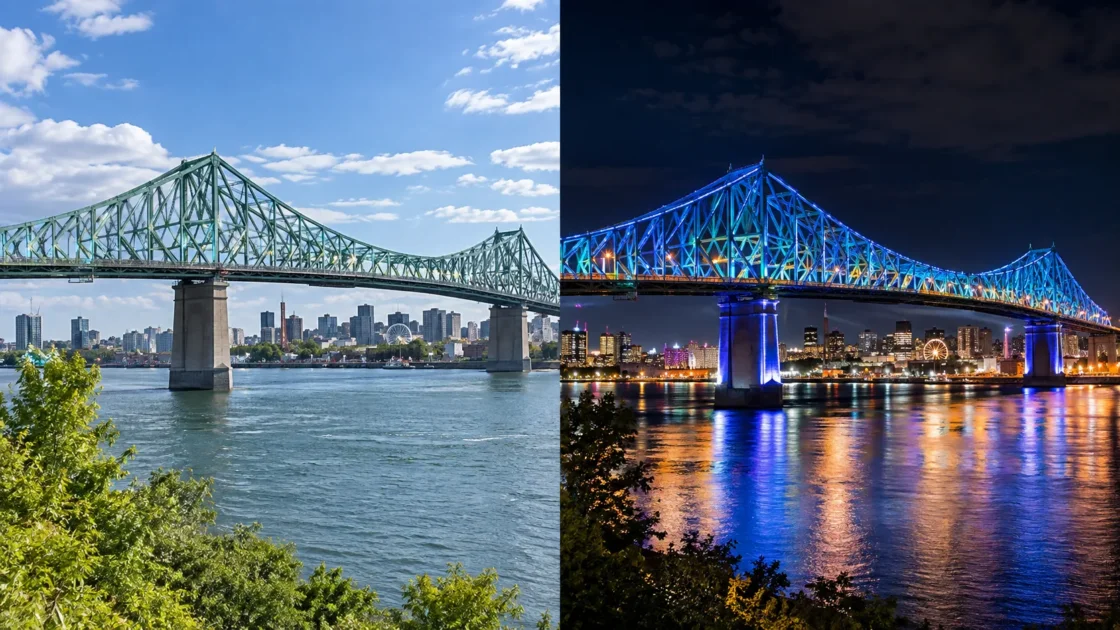
The Jacques Cartier Bridge becomes part of Montréal’s night skyline through Living Connections, a programmed illumination that responds to the changing seasons and the city itself. Rather than operating as a single show with one fixed start time, the bridge lighting runs as an evolving overnight display, with colours and animated effects changing after dark.
Illumination Schedule
Daily, the schedule begins at sunset.
How the Bridge Lighting Runs
The illumination is programmed around the natural light cycle rather than a fixed evening clock time. That means the start moves through the year as Montréal’s sunset time changes. The lighting system is automated, so there is no nightly switch-on ceremony visitors need to arrive for.
Once active, the bridge is not simply covered in one static colour. Its interior lighting follows a 365-colour chromatic calendar, with the palette moving gradually through seasonal tones during the year. Spring trends toward green, summer toward warmer orange shades, autumn toward red and winter toward blue.
The Jacques Cartier and Champlain Bridges Incorporated describes the illumination as continuous from sunset to sunrise under its normal programming. Temporary technical interruptions or modified lighting can occur, so the status shown in the live information card is the more useful reference for a particular night.
The show is currently listed as active.
What Changes During the Night
Living Connections was created by Moment Factory with six Montréal multimedia and lighting studios. The installation uses 2,807 lighting fixtures across different parts of the steel structure, including the bridge’s interior volume and exterior surfaces.
The seasonal colour is only one layer of the display. Animated fragments of light travel along the exterior structure, creating movement across the bridge rather than leaving it uniformly illuminated. The original concept was designed to react to Montréal data and social activity, giving the installation a changing visual rhythm from one night to another.
The official bridge FAQ also identifies a short one-minute light sequence every half hour. This makes the illumination different from an attraction where visitors wait for a long, separately ticketed performance: the bridge remains illuminated, while shorter programmed moments appear within the larger overnight display.
At certain times the normal appearance can also be altered by official operating decisions. JCCBI may tone down the illumination when federal half-masting protocols apply, while maintenance or technical issues can temporarily interrupt normal programming.
Seeing the Illumination in Montréal
The illuminated section is most easily appreciated from viewpoints that reveal a broad stretch of the bridge rather than only the roadway immediately around you. The main steel span crosses the St. Lawrence River between Montréal and the South Shore, while the bridge also passes Île Sainte-Hélène.
Arriving around the beginning of the nightly lighting period offers a natural transition from the bridge’s daytime appearance to its illuminated structure. Staying longer gives you more opportunity to notice how the animated exterior effects differ from the slower seasonal colour inside the bridge.
Viewing Tip
Because sunset shifts substantially between Montréal’s summer and winter seasons, plan around the current listed illumination time rather than assuming the bridge always lights at the same hour.
Access Around the Bridge
The Jacques Cartier Bridge carries road traffic and also has active-mobility facilities. Access conditions for the multipurpose path and sidewalk can differ, especially during maintenance work or special events. If your evening plan involves walking or cycling on the bridge itself, check the current JCCBI active-mobility status before setting out.
The illumination does not require admission or a reserved viewing session. Viewing is listed as free to view.