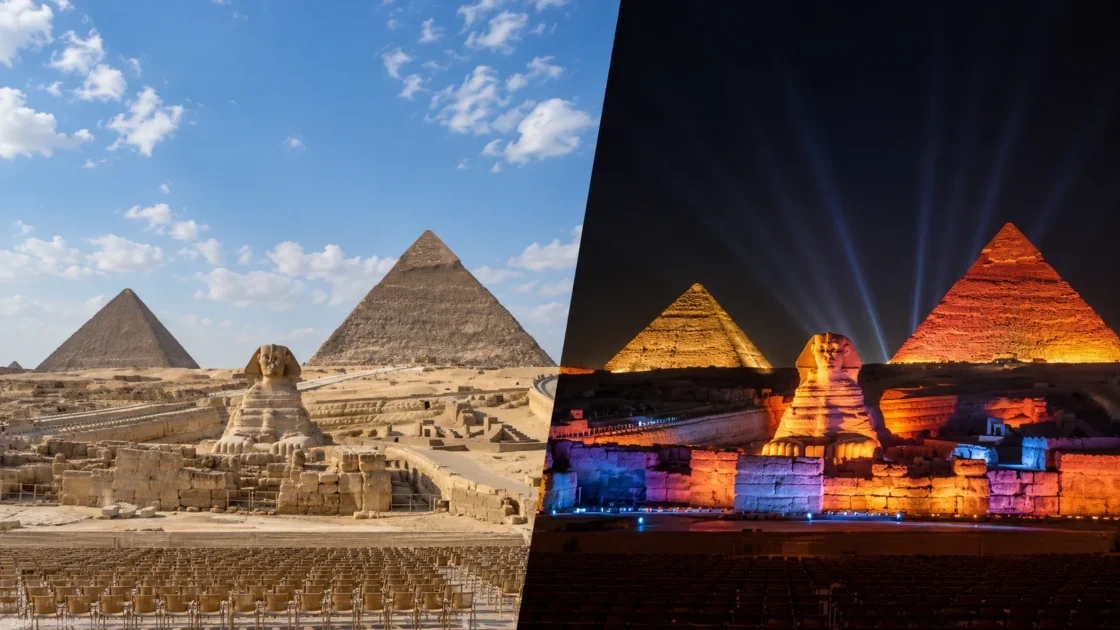
The Giza Pyramids Sound & Light Show uses the Great Sphinx and the three main pyramids as the setting for an evening narration about Khufu, Khafre, and Menkaure. The timetable deserves particular attention when planning: performance arrangements can change, and the show is offered in multiple languages, so an old fixed time from a travel itinerary may not match the performance available on your date.
Current Show Schedule
No regular schedule is currently listed.
How the Evening Schedule Works
The show operator offers the Giza production in 10 languages. That makes the booking time more than a simple choice between an earlier and later performance: the language attached to the available program also matters. When choosing a ticket, match the date, performance, and language rather than assuming every scheduled show uses the same narration.
The official show listing also warns that dates can change. For that reason, the current schedule for the selected visit date is more useful than a permanent timetable written months in advance.
Later-Show Note
The operator currently applies an attendance condition to the second performance on most days, while Thursday is listed differently. If an evening plan depends specifically on the later show, a confirmed booking is safer than assuming that performance will operate automatically.
How Long to Allow
Allow some additional time before the listed start rather than planning transportation around the performance time itself. The show takes place after dark at a major archaeological destination, so locating the correct event entrance and completing admission are separate from simply reaching the Giza area.
The Sphinx Tells the Story
The production presents the Great Sphinx as the narrator, using sound and illuminated monuments to tell stories associated with the Giza pyramids. Khufu, Khafre, and Menkaure form the central royal sequence. These are also the kings associated with the three large pyramids that dominate the Giza Plateau.
Narrative Voice
The Great Sphinx
Royal Focus
Khufu, Khafre and Menkaure
Setting
Giza Pyramids and Great Sphinx
The historical setting is more extensive than the three pyramids alone. Egypt’s Ministry of Tourism and Antiquities describes the Giza Plateau as a larger archaeological landscape containing pyramid complexes, smaller pyramids, temples, tombs, causeways, and the Great Sphinx. The night show concentrates that much broader setting into a narrated presentation centered on the best-known monuments.
This also explains why the experience differs from a daytime archaeological visit. The evening program is a staged presentation built around narration, sound, and lighting; it is not intended to replace time spent exploring the plateau and its monuments during normal archaeological-site access.
Finding the Sound & Light Venue
The operator lists its Giza location at Abu Al-Houl Square, Nazlet El-Semman Pyramids, Giza, Egypt. This is useful wording to keep with the booking when arranging a taxi, ride, or hotel transfer, because simply entering “Giza Pyramids” can refer to the much larger archaeological area.
Arrival Tip
Use the Sound & Light venue name and Abu Al-Houl Square location when arranging the final drop-off. Keep the booked performance time readily available so the driver or hotel desk knows that the trip is for the evening show rather than a daytime pyramid visit.
Ticket Changes
The operator’s current booking policy treats purchased Sound & Light tickets as non-refundable. It allows a reserved ticket to be rescheduled once when the request is made at least 24 hours before the original show, with the new date or venue subject to availability. Anyone whose travel plans may shift should take those terms into account before choosing a performance.
Because both the timetable and language choice affect the visit, keep the confirmation for the exact booked performance rather than relying only on a general nightly-show listing.