Tonight’s times
Venue local timeSchedule
Current published scheduleLocation
MapMap
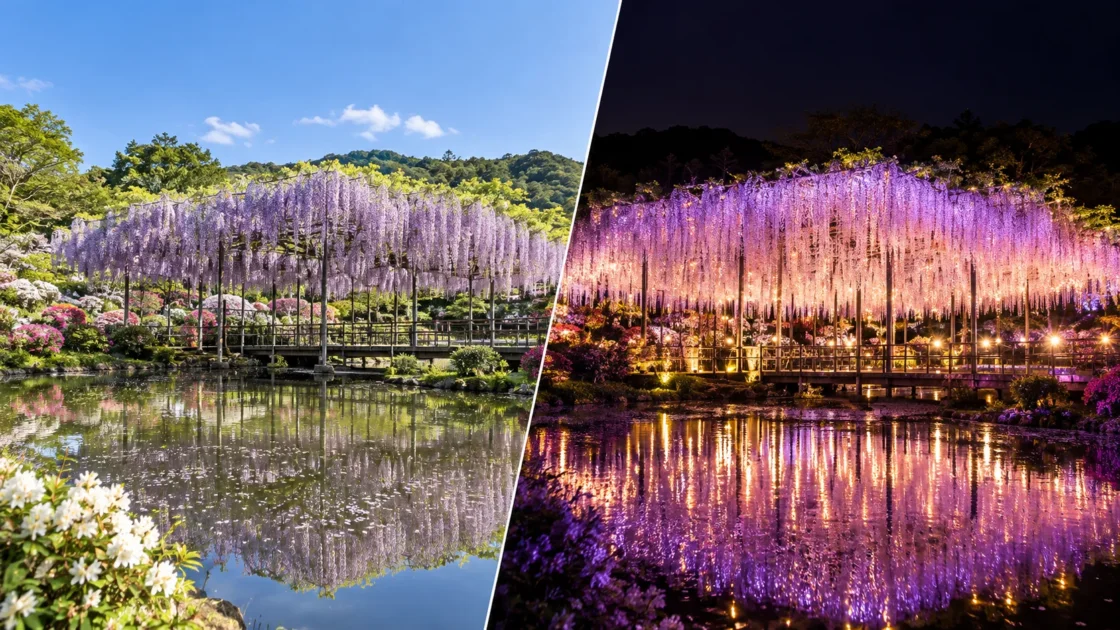
Ashikaga Flower Park’s winter illumination turns the garden in Tochigi into a large walk-through light display, with more than five million lights spread across roughly 100,000 square meters. Instead of a single timed performance, the evening experience is built around illuminated flower forms, water reflections, hillside scenes, projection effects, and the park’s well-known wisteria-inspired installations.
Current Illumination Schedule
From November 6, 2026 through January 5, 2027, Daily, one performance is scheduled at 4:30 PM.
The evening session opens before the park reaches full illumination, so there is no need to treat the experience like a show with one fixed starting time. Once the lights come on, visitors can move through the garden at their own pace until the evening session closes.
How the Evening Illumination Works
The show is scheduled from October 17, 2026 through February 14, 2027. The show is closed December 31. The long run means the garden does not look exactly the same throughout the season. Its presentation moves through three seasonal chapters, matching autumn flowers, Christmas, and the colder New Year period.
The first chapter, running from the opening of the illumination through mid-November, combines lights with the park’s amethyst sage. From late November through late December, Christmas-themed lighting becomes the seasonal focus. The New Year program then runs from January 1 through the end of the illumination season and pairs winter lighting with cold-season peonies.
This changing program is useful when choosing a visit date. An October or early-November visit emphasizes the connection between living flowers and illumination, while December has more Christmas imagery. January and February shift toward winter displays rather than recreating the same seasonal setting for the entire run.
Day and Evening Admission
During the illumination season, the daytime and evening sessions are operated separately. An evening admission ticket is required when entering the illuminated garden from the shopping area, so a daytime visit should not be assumed to include the night session automatically.
The lights generally begin after the evening session has already opened. That gives early arrivals time to enter before the garden is fully illuminated. Sunset also shifts considerably between October and February, which is why the park adjusts its lighting pattern and operating hours during the season rather than relying on one fixed year-round timetable.
What the Illumination Includes
The winter event is designed around the identity of Ashikaga Flower Park rather than using rows of decorative lights alone. Flower shapes, garden structures, water, slopes, and the forms associated with the park’s famous wisteria are used as part of the display. Nearly all of the event’s more than five million bulbs are LEDs.
Miracle Wisteria
One of the central installations reinterprets the park’s Great Wisteria through light. The sequence follows the appearance of spring wisteria from the beginning of flowering through full bloom and falling petals. For the 2026–27 season, the park also promotes a scent element inspired by the fragrance of its spring wisteria, adding another layer to this installation.
Water Reflections and Garden Scenes
Several displays use the garden’s physical layout instead of functioning as isolated decorations. Everyone’s Earth is positioned around water so that reflected lights become part of the scene. The display uses animals, plants, and people as parts of a shared Earth theme.
Elsewhere, illuminated roses create a flower-garden effect after dark, while Snow World uses a hillside as a large light mural with snowflakes and snowman imagery. Projection mapping is also incorporated into parts of the seasonal presentation, including scenes based on Japanese seasons.
The park’s installations are spread through the grounds, so the experience works better as a walking route than as a performance viewed from one position. Water surfaces, planted areas, slopes, and larger structures can look quite different as the viewing angle changes.
The 2026–27 edition is the park’s 25th illumination season. Its current program continues the large-scale winter format for which the venue has become known, while retaining flower-based displays that connect the event to the garden itself.
Arriving by Train or Car
The park is in Ashikaga, Tochigi Prefecture, at 607 Hasama-cho. For rail travelers, Ashikaga Flower Park Station on the JR Ryomo Line is the closest station. The station was created next to the attraction, making the train a practical option for an evening visit without relying on a shuttle from central Ashikaga.
The walk from the station to the park is only a few minutes. The park specifically warns that the station can become crowded when visitors leave after the illumination, and it recommends having enough value loaded on a transportation IC card before the return trip.
Train Tip
If leaving near closing time, allow extra time at Ashikaga Flower Park Station rather than planning a very tight connection. The main departure period after the lights can bring many visitors to the station at once.
Drivers can reach the area from several expressway interchanges. The park identifies Sano Fujioka Interchange on the Tohoku Expressway as one of the main approaches, with the drive taking about 20 minutes under normal traffic conditions. Routes are also available from Ashikaga, Sano-Tanuma, Ota-Kiryu, and Izuruhara Smart interchanges.
The main parking areas accommodate standard cars and buses, and additional temporary parking can be opened during busy periods. Parking is listed as free. Traffic conditions may differ sharply between an ordinary weekday and popular winter weekends, so driving time estimates should be treated as normal-condition figures rather than guaranteed arrival times.
Planning the Night Visit
The listed admission information is Night admission: ¥1,500 adult / ¥800 child. The evening illumination has its own admission arrangement, and children’s tickets apply to the park’s defined child age range rather than every visitor under 18.
Because this is a garden-wide event, there is no fixed seat, single viewing platform, or required route. Allow enough time to walk between the large displays rather than planning around only the moment when the lights are switched on. Visitors who want to see both dusk and full darkness can enter earlier in the evening session and watch the appearance of the garden change as daylight fades.
The event is outdoors, and winter evenings in Tochigi can be cold. Warm clothing becomes especially useful later in the season because much of the visit involves walking or standing outside rather than moving through heated indoor attractions.
The park does not allow pets to enter. Wheelchairs are available for free use inside the park on a first-come, first-served basis, although availability is limited. Coin-operated lockers are also provided near the front gate and shopping house for visitors who do not want to carry larger belongings through the illuminated garden.
The illumination season normally includes a closure on December 31, with New Year operations resuming afterward. Anyone planning specifically around year-end celebrations should rely on the current live schedule rather than assuming the park operates every night of the winter season.