Tonight’s times
Venue local timeSchedule
Current published scheduleLocation
MapMap
The Abu Simbel Sound & Light Show takes place after daytime visits to the temple complex have ended, using illumination, music, and narration to present the history of Ramesses II and the monuments at Abu Simbel. Because performance times can change, the current schedule is best read from the live show data rather than from a fixed timetable in the article.
Performance Pattern
Daily, performances are scheduled at 8:00 PM and 9:00 PM.
The show operator also notes that performances can depend on attendance levels, while an additional performance may be conditional. This is especially relevant on quieter evenings when more than one time appears in the schedule.
How the Evening Schedule Works
The Sound & Light operator publishes the Abu Simbel program as an evening attraction rather than part of the archaeological site’s daytime opening schedule. That distinction matters when planning a full day at the temples: the Ministry of Tourism and Antiquities publishes daytime visiting hours separately, while the night presentation follows its own performance timetable.
The operator currently presents the program as a multilingual experience. Its Abu Simbel information states that visitors can choose an appropriate language, so the experience is designed for an international audience rather than being limited to a single narration language.
When more than one performance is listed, do not assume every later show operates independently of demand. The operator publishes attendance conditions for Abu Simbel, so travelers with a fixed transport plan should treat their booked performance as the relevant time rather than simply arriving for any later listing.
What the Show Uses Abu Simbel to Tell
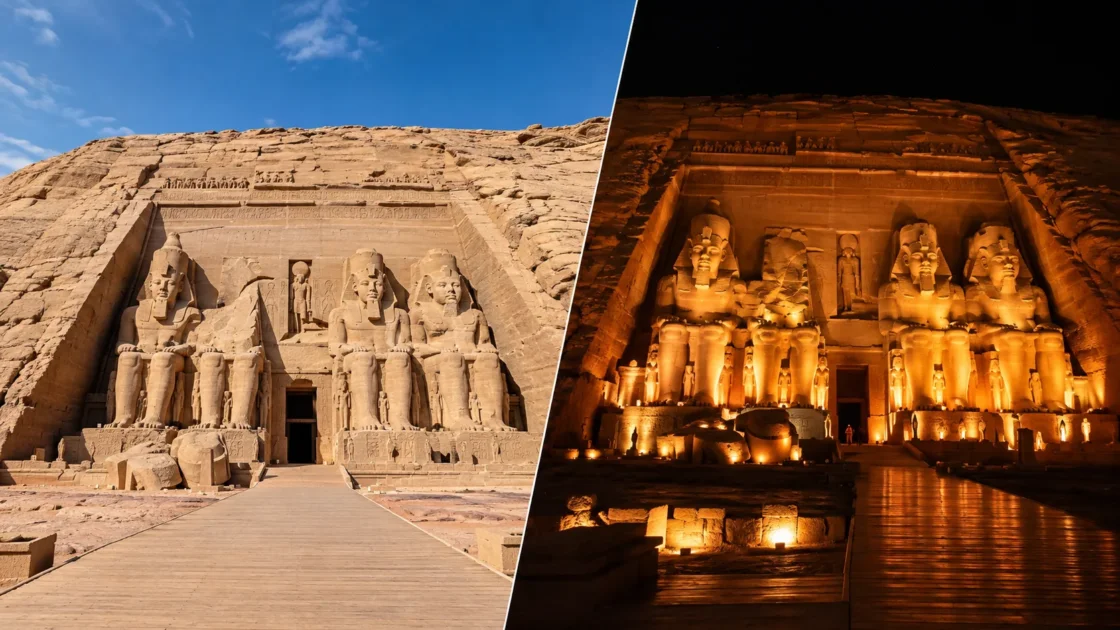
The presentation combines colored lighting, music, and historical narration with the temple façades themselves. The official show description says the program presents the history of the temples and gives an impression of their earlier appearance, turning the monuments into the visual focus rather than placing the performance on a separate conventional stage.
The setting gives the narration unusually strong historical material to work with. The Great Temple was cut into the rock for Ramesses II in the 13th century BC, with four colossal seated figures dominating its façade. Nearby, the Small Temple was dedicated to Hathor and Queen Nefertari; the Ministry notes that Nefertari’s façade statues are the same size as those of Ramesses II, an unusual feature in Egyptian royal representation.
Abu Simbel also has a remarkable modern chapter. The temples were moved to higher ground in the 1960s when construction of the Aswan High Dam threatened the Nubian monuments with flooding. UNESCO coordinated the wider international campaign that helped save and relocate monuments across the region, including Abu Simbel.
Viewing Tip
The show depends on seeing the monumental façades as part of the presentation, so allow enough time to reach the venue and settle in before the performance begins rather than planning your arrival for the exact listed start.
Planning an Evening at Abu Simbel
Abu Simbel is far south of Aswan city. The Sound & Light operator places the site roughly 280 km from Aswan, so the evening performance needs more transport planning than an attraction located within Aswan itself. Travelers coming from Aswan should account for the return journey or arrange accommodation in Abu Simbel rather than treating the night show as an extension of an ordinary city evening.
Daytime temple access and the evening performance should also be treated as different parts of the visit. Seeing the temples during daylight gives you access to architectural details that are easier to study closely, while the sound-and-light program uses the exterior setting, illumination, and narration for a different presentation after dark.
- Use the live schedule for the current performance pattern rather than relying on an older printed itinerary.
- Keep your confirmed performance time available when arranging a driver, hotel transfer, or other evening transport.
- Allow time between a daytime temple visit and the night program instead of assuming the schedules run continuously into one another.
- If several show times are displayed, remember that later performances may depend on the operator’s attendance conditions.